
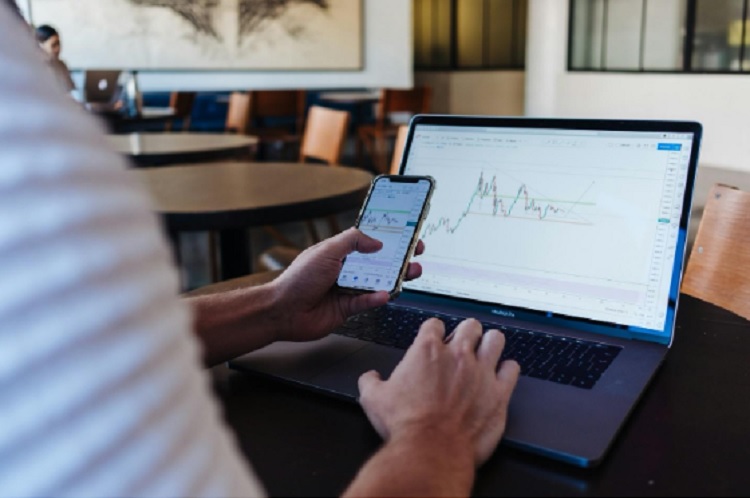
AI based regime signals are increasingly used to classify market conditions into categories such as trending ranging volatile or quiet. Many traders in the Philippines are curious about these tools because they promise faster interpretation of complex data. The appeal is understandable. Markets shift quickly, and it can be difficult to know whether a strategy that worked last month still fits the current environment.
Yet the most common mistakes happen when traders assume the signal is a prediction rather than a classification. Regime tools are designed to describe what the market is behaving like now, or what it has recently behaved like, not to guarantee what will happen next.
Why Forex Traders In The Philippines Are Paying Attention
For many participants in the Philippines, forex activity has grown alongside broader interest in online finance, overseas remittances, and global economic news. When the peso experiences pressure, or when import costs and fuel prices rise, currency moves feel more personal. That makes regime signals attractive because they seem to offer a structured way to avoid trading blindly during unstable phases.
However, relying on regime labels without understanding what they measure can lead to poor timing and overconfidence, especially during sharp news driven swings that affect emerging market currencies.
What A Market Regime Signal Really Measures
A market regime signal is basically a way of answering one question: what kind of market are we in right now, and how confident should we be about that call? Most signals are built from familiar building blocks, things like volatility, momentum, trend strength, mean reversion behavior, correlation shifts, and liquidity stand-ins. AI models just bundle those inputs together and spit out a label or a probability score.
So what do those outputs usually look like in practice? You’ll typically see one of a few recurring “states” show up on a dashboard: a trend that’s likely to keep running, a range-bound stretch where price keeps snapping back, a high-volatility stress phase where moves get jumpy and thin, or a transition zone where the model is basically saying, “I’m not sure yet.” If you’ve traded Asia hours, you might’ve noticed how USD/JPY can feel calm and orderly early on, then suddenly whip around once London liquidity hits, that’s a classic shift from range-like behavior into something more directional.
But here’s the catch, and it matters more than people admit: regimes tend to be identified with a lag. Why? Because even the best model still needs proof. It’s a bit like calling the weather after you’ve already stepped into the rain, the evidence only becomes obvious once price has moved enough to register across the inputs.
The Lag Problem Traders Underestimate
Many traders miss that regime detection can be late by design. A model may need multiple bars, sessions, or days to confirm that volatility has expanded or that a trend has become statistically significant. In practice, this means traders may receive a trend regime signal after a large part of the move has already occurred.
This is not a failure of AI. It is a consequence of requiring confirmation. The solution is not to demand faster signals, but to combine regime information with a plan that accounts for late recognition.
Overfitting To The Most Recent Market Story
Another blind spot is overfitting behavior. Traders see that a regime tool worked well during a recent phase, then they assume it will work the same way going forward. In the Philippines, this often happens when traders focus heavily on a single macro driver such as central bank comments, inflation prints, or headlines tied to the United States.
Regimes change when market structure changes. If liquidity conditions shift, correlations shift, or local risk appetite shifts, the same features can produce different outcomes.
Why Emerging Market Context Matters
The peso is influenced by remittance flows, import demand, global rate expectations, and regional risk sentiment. Emerging market currencies can experience sharper spikes and faster reversals than major currencies, especially around surprise news. Regime signals trained on calmer conditions may misclassify these phases or respond too slowly.
This is why Philippine centric traders should treat regime labels as a context tool rather than a trade trigger. A trigger needs precision. Regime data provides environment awareness.
What Traders Often Miss In The Data Pipeline
Most people fixate on the final regime label, but the real story sits underneath it: how the inputs were built in the first place. And that’s where small, almost boring choices can quietly steer the outcome. Change the data source, tweak the time window, or rescale a feature, and you can end up with a different regime call even though the chart “looks” the same. Why does that matter? Because the model isn’t reading price like a human, it’s reading the way you framed the evidence.
A lot of confusion tends to come from timing. Use a short lookback and the signal can flip like a weather vane, calling “trend” one moment and “range” the next, especially in choppy sessions. Go too long, and you get the opposite problem: it reacts like a cargo ship, slow to turn even after the market has clearly changed character. I’ve seen this trip up traders in Singapore watching the STI futures around major macro prints, by the time a long-window regime model admits volatility has picked up, the first clean move is already gone.
Then there’s market texture, the stuff you feel but don’t always quantify. If you don’t adjust for session liquidity patterns, the model can mistake thin-hours noise for a real regime shift. Think of the late New York to early Asia handoff, screens look calmer, spreads widen, and a few orders can nudge price more than they “should.” And mixing assets with very different volatility profiles can create its own distortion, it’s like averaging a scooter and a race car and expecting the speedometer to make sense.
Getting these details right doesn’t just satisfy curiosity, it tells you when to lean on the model and when to dial risk back. If you understand what the signal is sensitive to, you’ll know whether a regime change is a genuine tide shift or just a temporary ripple.
Human Judgment Still Matters
AI can spit out a clean summary of market conditions in seconds. But it can’t see the stuff that actually shapes your decisions: your risk tolerance, your time horizon, or how closely you can watch positions. It doesn’t know whether you’re comfortable riding a drawdown or if one bad move would keep you up at night. And for a lot of Philippine traders, that context matters even more because trading usually sits alongside a full-time job, family duties, and the daily grind of managing time zones. So what happens when a model flags a volatility shift at 2 a.m. in Manila, right when you’re asleep? The signal might be “right,” but it’s useless if you can’t act on it.
A practical trading plan has to respect execution reality. If you can’t manage fast moves, high-volatility regimes shouldn’t feel like an invitation, they should feel like a warning sign. Think of it like driving in a sudden downpour: you don’t speed up just because the road is “active,” you slow down because the margin for error collapses. I’ve seen plenty of traders do better simply by matching their strategy to their schedule, not the other way around.
Conclusion
Advanced AI-driven market regime signals can genuinely sharpen decision-making. But traders often gloss over the biggest catch: regimes describe the weather, they don’t promise the forecast. A “low volatility” label doesn’t guarantee calm, and a “risk-off” tag won’t stop a sudden reversal. So why do people get burned? Because signals can lag, misread abrupt emerging-market spikes, and quietly build overconfidence when users treat a regime label like a green light to trade.
For traders in the Philippines, the real edge comes from using these tools the way a risk manager would. That means adjusting strategy choice, tightening or loosening risk limits, and scaling position size based on the environment, not chasing every alert. I’ve seen Manila-based traders do best when regime awareness is paired with solid execution and realistic expectations, especially when moves hit during awkward local hours. Used well, regimes help you avoid forcing trades in the wrong conditions and stay focused on the setups where your approach has the best chance of working.