
The THAAD anti-missile system battery is expected to be deployed in South Korea with eight to ten months to have a deterrent effect against the provocation of North Korea.
A Terminal High Altitude Area Defense (THAAD) anti missile system battery will be deployed in South Korea, according to the commander of the United States Forces in the country.
The deployment of the THAAD anti missile system is expected within eight to ten months.
Vincent Brooks, the commander of the United States Forces Korea, laid out the plans for the deployment where he said that rotating strategic weaponry onto the Korean peninsula would have a deterrent effect against the provocations of North Korea.
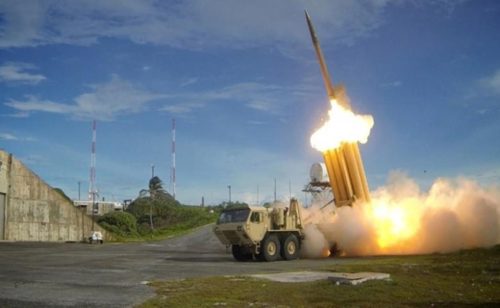
Brooks also said that the THAAD anti-missile system battery would be bigger than the one deployed in Guam.
An official on the U.S. forces could not confirm the comment of Brook on rotation, but said that the United States and South Korean governments are currently in discussions for such strategic weaponry deployment.
Last September, two U.S. B-1 bomber flew over South Korea in a show of force and solidarity with its ally following the fifth nuclear test of Pyongyang.
Seoul and Washington have agreed to deploy the THAAD system in South Korea to protect against the threats of North Korea. The decision angered China as it worries that the powerful radar of the system can see into its territory.
According Hua Chunying, spokesperson for the foreign ministry of China, urged South Korea and the United States to “immediately cease” the deployment process and reiterated that Beijing would take “necessary steps to safeguard the security interests of China”.
Hua said: “The U.S. deployment of THAAD on the Korean Peninsula seriously damaged strategic balance in the region and seriously harms the strategic balance in the region and seriously harms the strategic security interests of relevant regional countries, including China”.
South Korea plans to have THAAD operational by the end of next year at the latest.