
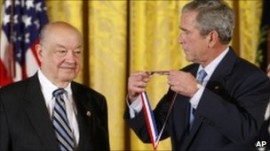
US engineer Paul Baran who was given credits for helping in the development of the internet during the 1960s died at the age of 84 at his home in Palo Alto, California.
Complications of lung cancer had been the cause of Baran’s death on Saturday night based on the reports of The New York Times.
He is recognized to bring the idea of “packet-switching” wherein the data is bundled into small packages which are eventually sent through a network.
He was able to outline such concept while he carried on the issues of Cold War military research.
Technology became the concept organized by the Department of Defense leading to the creation of Arpanet, which is a predecessor in the development of the internet.
Such concept was known to be ahead of its time that private corporation, AT&T, had refused on it.
“AT&T repeatedly said his idea wouldn’t work, and wouldn’t participate in the Arpanet project,” said Vinton Cerf, a vice president at Google and longtime friend of Baran.
A quoted statement of The New York Times says, “Paul wasn’t afraid to go in directions counter to what everyone else thought was the right or only thing to do.”
His son David Baran testifies that he was a “man of infinite patience”. Recently, his father had able to let him see a paper that was written way back 1966 which hypothesized about what the people will be doing with telecommunication networks in the latter days.
In 2000, Baran’s idea eventually predicted that people will use the networks for online shopping and news.
A National Medal of Technology and Innovation had been given to Mr. Baran by President George W. Bush in the year 2008.
Baran’s extreme idea greatly contributed to the birth of what we now enjoy, the internet.